
E-Commerce Solutions
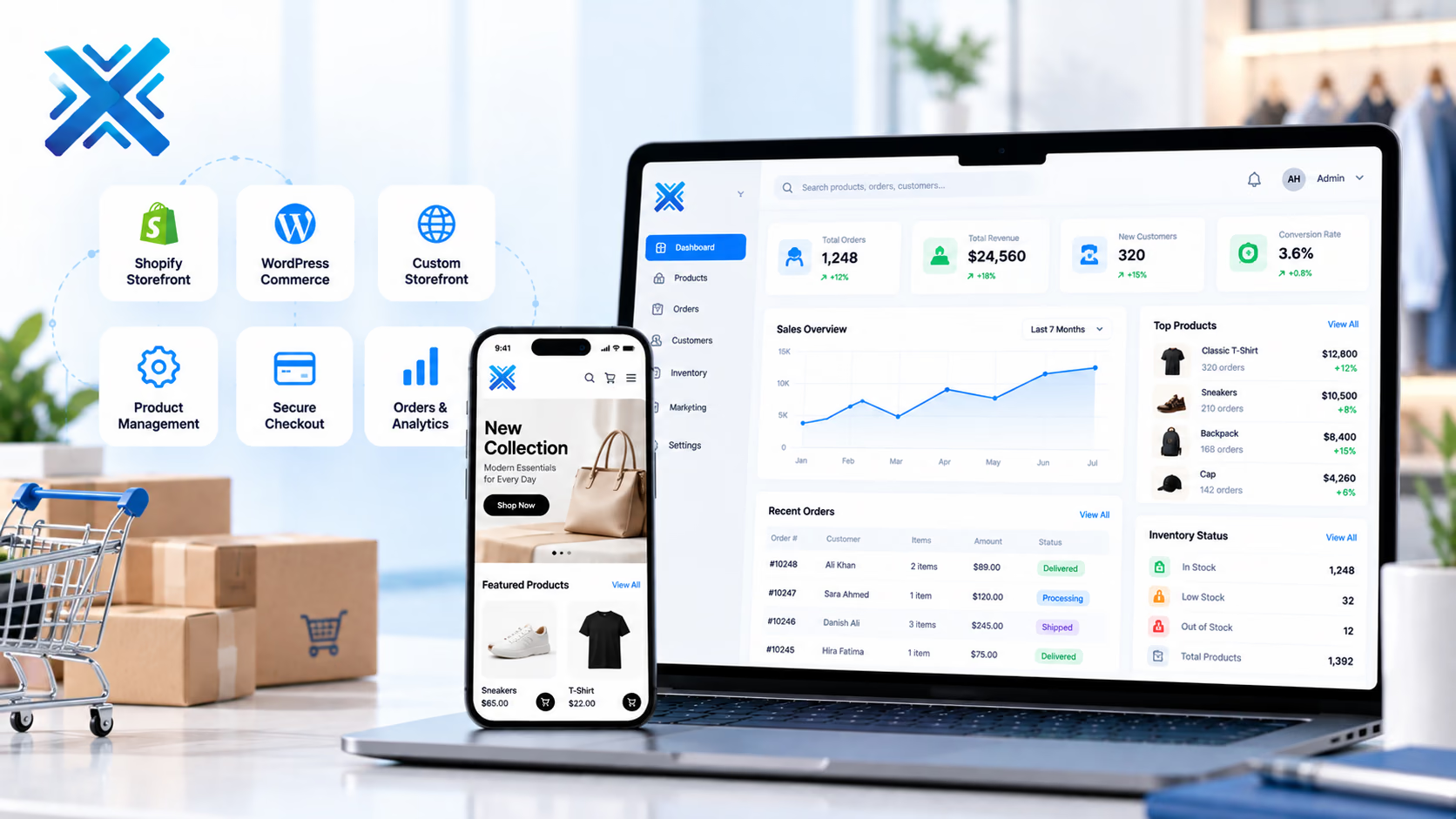
Storefront, catalog, checkout, and the admin your team will actually use, on Shopify, WordPress, or a stack we build.
Industry Platforms
The platform
Brands and retailers who need a shop that matches how they sell, not a theme they cannot extend.
A store is a catalog, a checkout, and an operations loop. XiteHub designs e-commerce so those three agree. Simple catalogs often belong on Shopify with a theme we extend. Content-heavy brands may stay on WordPress. Unusual bundles, B2B price lists, or a headless storefront sit on a stack we own with you. Payments, shipping, and tax follow the markets you sell into. Abandoned carts and SEO are configured, not promised as a magic lift. When you already have a till or a warehouse, the shop reads the same SKU file.
Book a walkthroughThe gap
What is usually broken
The theme cannot do the product, the checkout, or the market you are in. Stock, orders, and the phone app each tell a different story. Marketing wants pages the platform fights.
Approach
How we fit it
XiteHub ships commerce the way the catalog needs it. We have launched Shopify storefronts such as Kalopsia, WordPress shops such as Travel Collection, and React storefronts such as Nourvelle, plus mobile apps beside the shop when the brand needs one. We pick Shopify, WordPress, or a custom Next.js store after we see catalog complexity, checkout rules, and who will edit content next year.
Capabilities
What ships in the first release
- 01
Catalog, variants, and merchandising the editor can change without a deploy
- 02
Checkout with the gateways and shipping rules you already run
- 03
Customer accounts, order history, and the returns path you specify
- 04
Admin for orders, inventory hooks, and content pages
- 05
SEO-ready templates, feeds, and redirects when we migrate a live URL
- 06
Optional marketplace, subscriptions, or a mobile app beside the shop
Modules
How the platform is cut
We go live on the slice you need first. The rest follows when the operators are ready.
01
Storefront
Collection, product, cart, and content pages. Built for the brand, not a generic starter.
02
Checkout and payments
Gateways, currencies, and shipping you name. Guest and account checkout as you sell today.
03
Catalog ops
Products, inventory hooks, and merchandising. Feeds for ads when you run them.
04
Orders
Admin, notifications, and fulfilment status. Returns if that is part of the promise.
05
Growth add-ons
Abandoned cart mail, subscriptions, multi-vendor, or a companion app. Only what you will operate.
Why it lands
What changes for the team
- 01
The platform matches the catalog, so you are not fighting the theme every season
- 02
Orders, stock, and the till can share one item file
- 03
Editors ship pages without waiting on engineering for every banner
- 04
A migration keeps URLs and redirects so you do not drop the rankings you already earned
- 05
Mobile can be a real app when the brand needs it, not only a cramped website
- 06
You are not locked into a theme shop that cannot do your next market
Rollout
How we implement it
Workshops first, then a live slice, then the rest of the modules. Operators sign off before we cut over.
01
Catalog and channel
Count SKUs, markets, and who edits the shop. That decides Shopify, WordPress, or custom.
02
Information architecture
Collections, filters, and the PDP fields that matter before visual design.
03
Build
Theme or storefront, then checkout. Content models the team can fill without us.
04
Integrations
Payments, shipping, inventory, and analytics. No unused pixels.
05
Content and redirects
Migrate URLs, images, and reviews you want to keep. Test checkout on real gateways in sandbox.
06
Launch
Cut DNS, watch the first orders, and stay on for the first week of merchandising.
Fit
Where this platform belongs
- 01
A jewelry or lifestyle brand that needs Shopify plus a mobile app, as we did for Kalopsia
- 02
A catalog that still belongs on WordPress because content is half the shop
- 03
A custom React storefront when bundles or B2B pricing will not fit a theme
- 04
A retailer that must share stock with a physical till
Connects
Systems this sits beside
- Shopify, WordPress, or a headless CMS
- Payment gateways for the markets you sell in
- Shipping and courier APIs
- Inventory or POS for available qty
- Email and ads for carts and catalogs
Stack
What we usually ship it on
- Shopify
- WordPress
- WooCommerce
- Next.js
- React
- Node.js
- React Native
- REST APIs
- AWS
Hosting
Where it can live
- 01
Cloud hosted
Managed on AWS, Azure, or GCP when you want updates handled for you.
- 02
On-premise
Private install in your rooms when control or compliance requires it.
- 03
Hybrid
Mix cloud and on-premise across teams or sites when one model is not enough.
FAQ
Questions, answered
Scope, ownership, and how we cut over E-Commerce Solutions without a weekend freeze.
Continue
More in Industry Platforms
- 01
School Management System
Admissions, attendance, fees, and exams in one student record for the office, teachers, and parents.
- 02
Hospital Management System
Appointments, records, pharmacy, lab, and billing on one patient file for clinics and hospital floors.
- 03
AI Automation Platform
Workflows that read documents, route work, and answer from your own files, with a person still on the exceptions.
- 04
ERP Software
One ledger for finance, purchasing, inventory, and operations so each department is not running its own spreadsheet.

Need a walkthrough of E-Commerce Solutions?
Book a free consultation with our solutions architects. We'll map requirements and share a clear roadmap within 48 hours.